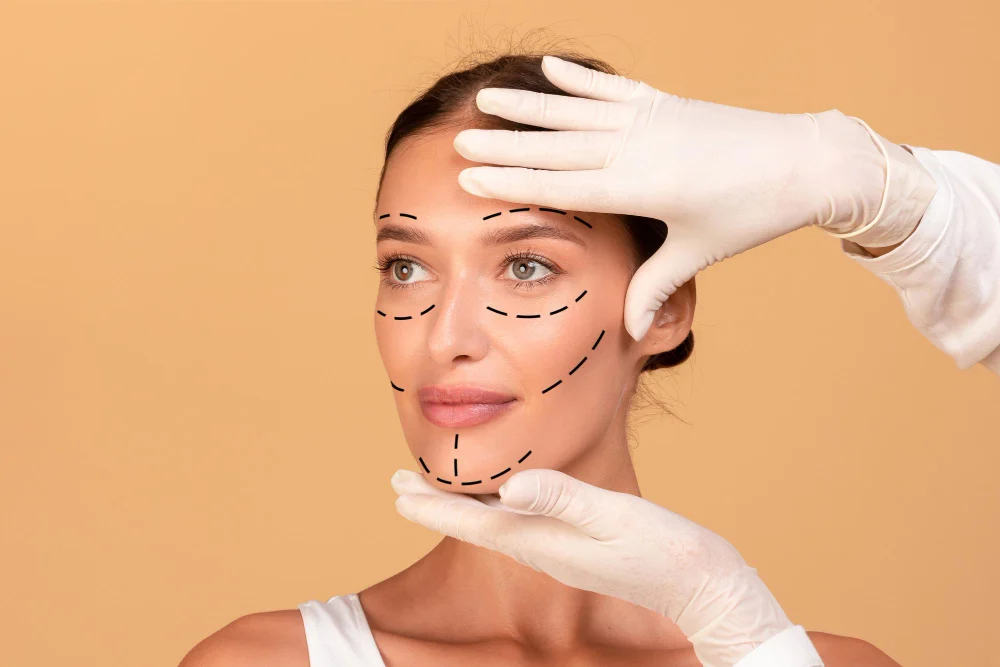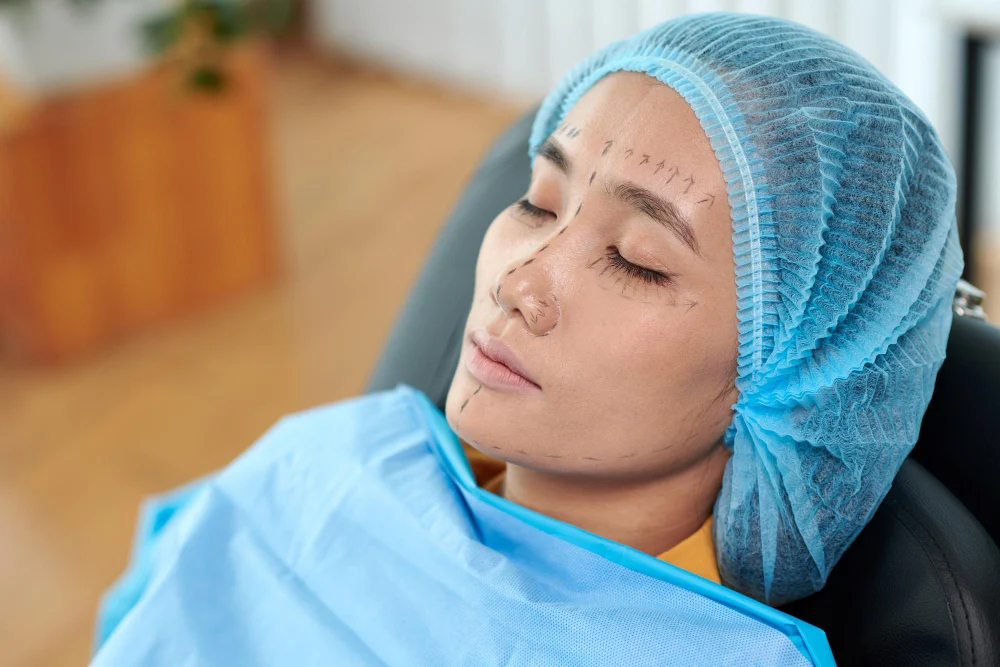
Summary:- Facial fat transfer and deep plane facelift treat different aspects of facial ageing rather than competing with each other. This blog explains how fat transfer restores lost volume, while a deep plane facelift repositions sagging facial tissues for a more youthful appearance. It also explores when each procedureor a combination of bothdelivers the most …


Summary:– Facial fat transfer and deep plane facelift treat different aspects of facial ageing rather than competing with each other. This blog explains how fat transfer restores lost volume, while a deep plane facelift repositions sagging facial tissues for a more youthful appearance. It also explores when each procedureor a combination of bothdelivers the most natural and long-lasting results.
When patients first consider facial rejuvenation surgery, one of the most common questions they ask is:
“Should I have a facial fat transfer or a deep plane facelift?”
At first glance, these procedures may appear to achieve the same goal. Both aim to create a younger, fresher appearance, and both can improve facial ageing.
However, they work in completely different ways.
In fact, comparing a facial fat transfer versus a facelift is often asking the wrong question.
Rather than competing procedures, they address different aspects of the ageing process. Understanding this difference is one of the most important steps in managing your overall facelift surgery expectation and choosing the right treatment path.
In my own practice, I often explain one simple concept to patients:
Facial fat transfer adds new volume. A deep plane facelift repositions your existing volume.
Once patients understand this principle, deciding which treatment or combination of treatments is most appropriate becomes much clearer, especially for those seeking the best facelift surgery in London.
Key Takeaways
- Facial fat transfer versus facelift is not always an either-or decision.
- A deep plane facelift repositions the facial tissues and restores descended facial fat to a more youthful position, offering the core structural benefits of facelift surgery.
- Facial fat transfer replaces volume that has genuinely been lost through ageing.
- Many patients who believe they have “lost cheek volume” actually have facial fat that has descended rather than disappeared.
- Some patients benefit from combining a deep plane facelift with selective facial fat transfer to address both tissue descent and true volume loss.
- The best age to get a facelift depends heavily on your unique facial anatomy and tissue laxity rather than your chronological age alone.
Why Do We Look Older?
To understand the difference between fat transfer versus deep plane facelift, we first need to understand what actually happens as the face ages.
Facial ageing is not caused by a single process.
Instead, several changes occur simultaneously:
- The facial retaining ligaments gradually become weaker.
- The deeper facial tissues begin to descend.
- Skin loses elasticity.
- Certain facial fat compartments gradually lose volume.
- The facial skeleton undergoes subtle age-related changes.
These processes occur at different rates in different people.
Some individuals retain excellent facial volume well into their sixties but develop significant tissue descent.
Others remain relatively tight but gradually lose volume in the cheeks, temples and around the eyes.
This is why there is no single treatment that suits every patient.
What Is Facial Fat Transfer?
A facial fat transfer, also known as fat grafting or autologous fat transfer, involves harvesting fat from another part of the body using gentle liposuction.
The fat is carefully processed before being injected into selected areas of the face.
Typical treatment areas include:
- The cheeks
- Temples
- Tear troughs
- Around the mouth
- Areas of facial hollowing
The purpose of facial fat transfer is straightforward.
It adds new volume.
If facial fat has genuinely disappeared through ageing, replacing some of that volume can soften hollow areas and restore youthful facial contours.
Unlike dermal fillers, transferred fat has the potential to survive permanently once it establishes a new blood supply.
However, facial fat transfer has one important limitation.
It does not lift sagging tissues.
Adding volume to tissues that have already descended does not reposition them.
What Is a Deep Plane Facelift?
A deep plane facelift works in an entirely different way.
Rather than adding new volume, it restores the patient’s own facial anatomy.
During a deep plane facelift, the deeper facial tissues are carefully released from their retaining ligaments before being repositioned into a more youthful position.
Importantly, this includes the patient’s own facial fat compartments.
One of the biggest misconceptions about facelifts is that they simply tighten loose skin.
Modern deep plane facelift surgery does far more than this.
As we age, the fat pads that once created youthful cheek fullness gradually descend under the influence of gravity and weakening ligaments.
The result is familiar to all of us.
The cheeks become flatter.
The nasolabial folds deepen.
Jowls begin to appear.
The jawline becomes less defined.
Many patients assume that all of this is caused by volume loss.
In reality, a significant proportion of their facial fat has simply moved downwards.
A deep plane facelift restores these descended fat compartments to their original anatomical position.
This is one of the reasons why patients often regain natural cheek fullness after surgery without having any fat added at all.
Instead of creating new volume, the operation restores the volume that was already therebut in the wrong place.
Why Patients Often Confuse These Procedures
This is perhaps the most common misunderstanding I encounter during consultations.
Patients frequently tell me:
“My cheeks have become flat.”
They are often correct.
But the next question is:
Why have they become flat?
There are two possible answers.
The first is true volume loss.
As we age, some facial fat gradually disappears. This process often begins surprisingly early, with subtle changes becoming noticeable from the mid-thirties onwards. Bone remodelling also contributes to a loss of structural support.
In these patients, adding volume may be beneficial.
The second possibility is volume descent.
The fat has not disappeared.
It has simply moved.
Instead of sitting high over the cheekbone where it creates youthful facial contours, it has descended into the lower face, contributing to nasolabial folds, marionette lines and jowls.
These two processes often occur together.
The challenge for the surgeon is identifying how much of the apparent volume loss is genuine and how much simply needs to be repositioned.
That distinction determines whether a patient needs facial fat transfer, a deep plane facelift, or a carefully selected combination of both.
Can Facial Fat Transfer Replace a Deep Plane Facelift?
In most patients showing moderate or advanced facial ageing, the answer is no.
This is because facial fat transfer and a deep plane facelift address different problems.
If the jawline has softened, jowls have developed and the neck has begun to sag, simply adding volume to the face will not reposition these tissues.
In fact, adding excessive fat to a face that has already descended can sometimes create an appearance that is fuller, but not necessarily younger.
This is one of the reasons why careful assessment is so important.
The goal should never be to make the face larger.
The goal is to restore youthful anatomy.
When facial ageing is primarily caused by tissue descent, repositioning the patient’s own tissues usually produces a more natural result than simply adding volume.
When Is Facial Fat Transfer the Better Choice?
There are patients in whom facial fat transfer is an excellent procedure.
These typically include:
- Younger patients with early facial hollowing.
- Naturally slim individuals with limited facial fat.
- Patients who have developed hollow temples.
- Patients with volume loss beneath the eyes.
- Patients with localised facial volume deficiency but minimal skin laxity.
In these patients, lifting surgery may be unnecessary because the facial tissues remain in a good position.
The problem is genuine volume loss rather than tissue descent.
Replacing this lost volume can restore softer, healthier and more youthful facial contours.
When Is a Deep Plane Facelift the Better Choice?
A deep plane facelift is usually the preferred treatment when facial ageing is caused predominantly by descent of the deeper facial tissues.
Typical signs include:
- Jowls.
- Loss of jawline definition.
- Deepening nasolabial folds.
- Marionette lines.
- Neck laxity.
- Descent of the cheeks.
- Loss of youthful facial contour.
These changes cannot be corrected by adding volume alone.
Instead, they require the facial tissues to be repositioned back towards their original anatomical location.
This is exactly what a deep plane facelift is designed to achieve.
One of the great advantages of this technique is that repositioning the descended facial fat often restores youthful cheek fullness naturally.
Many patients are surprised to discover that they look as though volume has been added, when in reality their own facial fat has simply been returned to where it belonged years earlier.
Can Both Procedures Be Combined?
Absolutely.
In carefully selected patients, combining a deep plane facelift with facial fat transfer can produce outstanding and very natural results.
The important point is understanding why fat is being added.
A deep plane facelift restores the facial fat that has descended over time.
However, ageing also causes true loss of facial fat.
From approximately the mid-thirties onwards, some facial fat compartments gradually become smaller. Unlike descended fat, this lost volume cannot be lifted back because it no longer exists.
This is where facial fat transfer becomes valuable.
After repositioning the existing facial tissues with a deep plane facelift, I carefully assess whether any areas still appear deficient in volume.
If genuine volume loss remainsfor example in a naturally lean patient or someone with marked temple or cheek hollowingsmall, carefully placed fat grafts may complete the rejuvenation.
For this reason, I do not regard facial fat transfer as an alternative to a deep plane facelift.
Instead, I regard it as an adjunct procedure that may enhance the final result in selected patients.
Less is often more.
The aim is always to restore youthful facial balance rather than creating excessive fullness.
How I Assess My Patients
Every consultation begins with the same question:
Why does this face look older?
Not every patient ages in the same way.
Some lose volume.
Some develop tissue descent.
Most experience a combination of both.
The challenge is determining which process is responsible for the patient’s appearance.
Rather than asking where more volume should be added, I first determine whether the patient’s existing facial fat simply needs to be restored to its original position.
Only after this assessment do I consider whether genuine volume replacement is necessary.
This personalised approach avoids unnecessary fat grafting while ensuring patients who truly need additional volume receive it in a measured and natural way. Following the procedure, I also guide my patients through the essential lifestyle choices and things you can do to maintain a facelift over the long term to protect their investment.
Facial Fat Transfer vs Facelift – At a Glance
- Facial fat transfer versus facelift is not always an either-or decision.
- Facial fat transfer adds new volume.
- A deep plane facelift repositions your existing volume.
- A deep plane facelift often restores natural cheek fullness by lifting descended facial fat back towards its youthful position.
- True age-related fat loss cannot be corrected by lifting alone and may benefit from selective fat grafting.
- In my practice, facial fat transfer is used selectively and only when genuine volume replacement is required after the existing tissues have been restored.
Final Thoughts
Patients often ask whether they should choose facial fat transfer or a deep plane facelift.
In reality, the answer is rarely that simple.
These procedures are not competitors.
They are complementary techniques that address different components of facial ageing.
A deep plane facelift restores the facial tissues and the patient’s own descended fat to their youthful position.
Facial fat transfer replaces volume that has genuinely been lost over time.
Understanding this distinction is essential.
Rather than treating every patient with the same operation, my goal is to understand precisely why the face has aged and then recommend the procedureor combination of proceduresthat restores natural, elegant and long-lasting facial rejuvenation.
Frequently Asked Questions
Can facial fat transfer replace a facelift?
Usually not.
Fat transfer replaces lost volume but does not reposition descended facial tissues. Patients with jowls, neck laxity or significant facial descent generally benefit more from a deep plane facelift.
Does a deep plane facelift restore cheek volume?
Yes.
One of the major advantages of a deep plane facelift is that it repositions the patient’s own descended facial fat back towards its youthful position.
Many patients regain natural cheek fullness without requiring additional fat grafting.
Will I still need facial fat transfer after a facelift?
Not necessarily.
Many patients achieve excellent facial volume simply by repositioning their existing tissues.
However, patients with genuine age-related fat loss or naturally lean faces may benefit from carefully selected fat grafting at the same time.
Which lasts longer: facial fat transfer or a deep plane facelift?
The procedures treat different aspects of ageing.
A deep plane facelift restores facial position, while surviving transferred fat can provide long-term volume replacement.
When appropriately selected, both procedures offer long-lasting results.
Can too much facial fat transfer make the face look unnatural?
Yes.
Overfilling the face can create excessive roundness and obscure natural facial contours.
For this reason, I prefer a conservative approach, adding only the volume that is genuinely required
Book a Consultation
It’s easy and free!