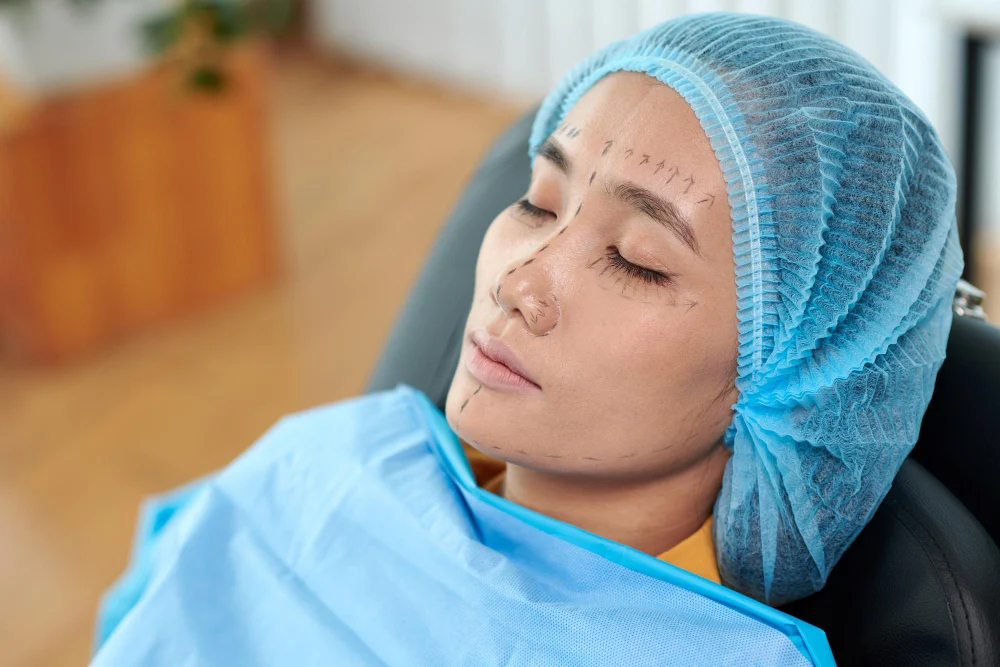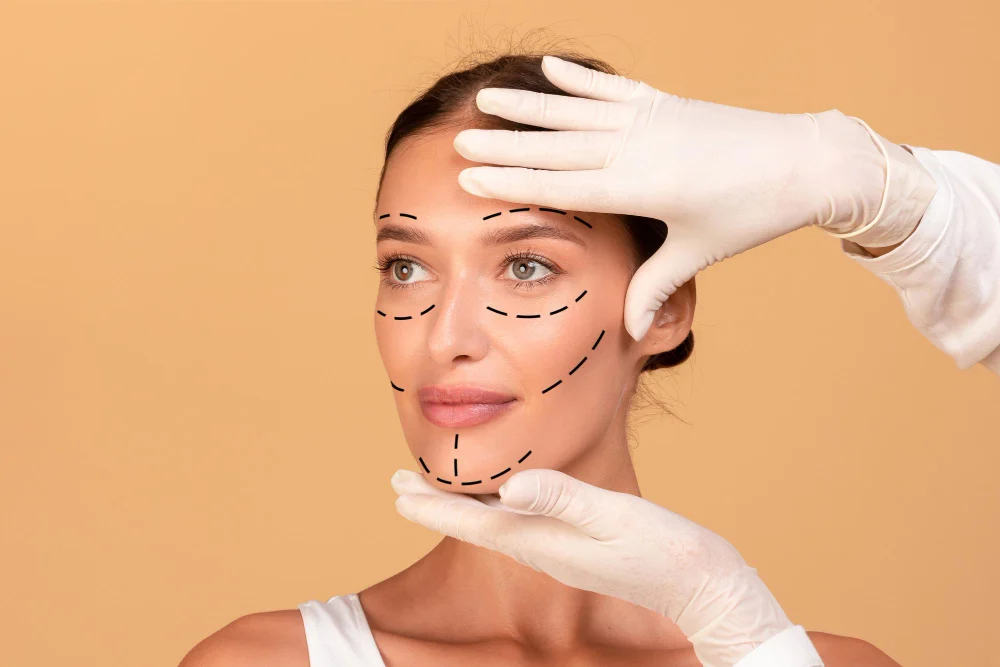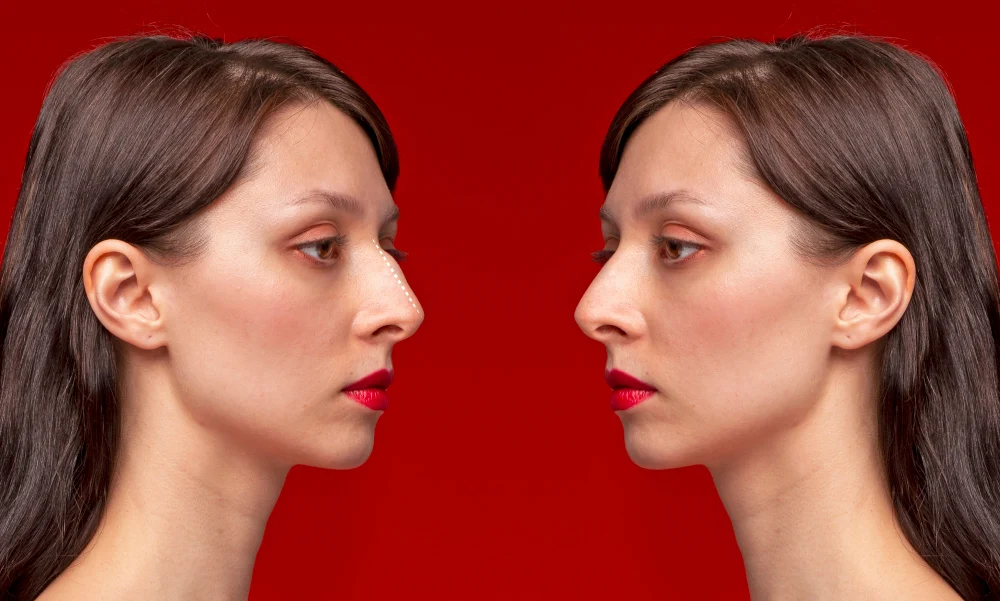
Over the last few years, a new phrase has quietly entered the vocabulary of aesthetic surgery patients: submandibular gland shaving. What was once a highly specialised manoeuvre performed selectively by only a small number of surgeons has increasingly become part of mainstream social media discussion surrounding deep neck lift surgery. Patients now arrive at …

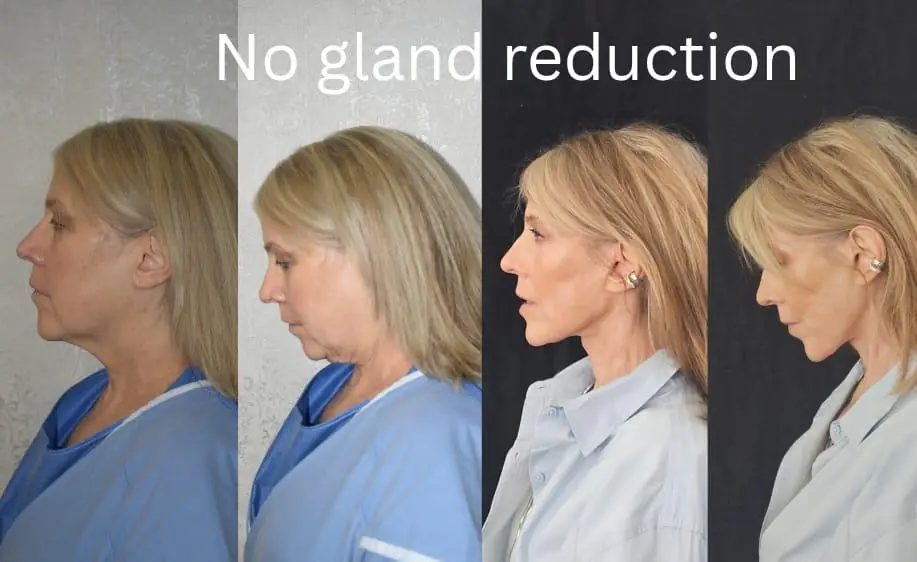
Over the last few years, a new phrase has quietly entered the vocabulary of aesthetic surgery patients: submandibular gland shaving.
What was once a highly specialised manoeuvre performed selectively by only a small number of surgeons has increasingly become part of mainstream social media discussion surrounding deep neck lift surgery. Patients now arrive at consultations asking very specific questions:
“Do you shave the glands?”
“Do you remove the glands?”
“Will my neck be completely hollow underneath the jawline?”
Interestingly, many patients asking these questions do not necessarily fully understand the anatomy involved, the purpose of the procedure, or the risks associated with it. Instead, they have often encountered the term repeatedly on Instagram, TikTok, YouTube, or online forums where increasingly sharp, sculpted, and hyper-defined neck contours are presented as the new aesthetic ideal.
As a surgeon who has specialised in facial rejuvenation surgery for over two decades, I believe this topic deserves a calm, thoughtful, and honest discussion.
Not because submandibular gland reduction is “wrong,” and not because surgeons performing it are careless or unethical. Rather, because some procedures in aesthetic surgery carry a level of risk that must always be weighed very carefully against the true aesthetic benefit being achieved.
And in my opinion, this is one of them.
What Are the Submandibular Glands?
The submandibular glands are normal salivary glands located beneath the lower jaw (mandible), on both sides of the upper neck. Their function is to produce saliva.
In some individuals, these glands can become visible or prominent beneath the jawline, particularly in certain lighting conditions or after significant ageing-related changes in the neck.
Over the last decades, some surgeons have begun partially reducing, shaving, or removing portions of these glands during deep neck lift surgery in order to create an extremely sharp cervicomental angle — the angle between the neck and underside of the jaw.
This can produce a dramatically sculpted profile photograph.
However, anatomy and beauty are rarely as simple as social media suggests.
Does Ageing Really “Create” Large Submandibular Glands?
One of the most important misconceptions surrounding this trend is the idea that the glands themselves are always the problem.
In reality, much of what patients perceive as “fullness” beneath the jawline is often caused by platysmal laxity, tissue descent, loss of structural support, submental fat, skin laxity, and changes in neck tension with ageing.
In many cases, a properly performed deep neck lift with platysmaplasty can significantly improve neck contour without touching the submandibular glands at all.
A medial corset platysmaplasty combined with lateral platysmal suspension often creates a natural lifting and supportive effect that improves the neck contour substantially while preserving normal anatomy.
Importantly, when patients look at photographs of themselves in their 20s or 30s, they rarely had a completely hollowed-out submandibular region to begin with.
Natural youthful anatomy still contains soft transitions beneath the jawline.
Youthfulness is not anatomical emptiness.
The Difference Between “Sharp” and “Natural”
One of the concerns I personally have with submandibular gland reduction is aesthetic.
While an ultra-sharp neck may appear dramatic in selected side-profile photographs or highly curated social media videos, it can sometimes appear unnatural in real life.
A naturally youthful neck usually has gentle contour transitions, soft anatomical fullness, and continuity between the face and neck.
When the submandibular glands are significantly reduced, the tissue beneath the jawline can sometimes become excessively hollowed or excavated. In certain patients, this creates a look where the head almost appears visually disconnected from the neck — an over-skeletonised appearance that may look surgically sculpted rather than naturally youthful.
The result can resemble an aesthetic ideal created primarily for static photography rather than for normal human movement, conversation, and three-dimensional viewing.
Patients are not viewed exclusively from the side in perfect lighting. They are seen while talking, smiling, turning, swallowing, laughing, and ageing over time.
An operation that creates a dramatic profile image is not necessarily creating the most harmonious long-term aesthetic result.
A Personal Experience That Shaped My Surgical Philosophy
Around twenty years ago, during a fellowship in Los Angeles, I witnessed a severe intraoperative haemorrhage during deep neck surgery involving the submandibular gland region.
The bleeding was dramatic and extraordinarily difficult to control. At the time, it was deeply traumatic to witness. The patient came dangerously close to a catastrophic outcome.
That experience remained with me throughout my career.
Over the course of my career, I have performed selective submandibular gland shaving in carefully chosen cases where gland prominence contributed significantly to neck contour imbalance.
However, my approach has always remained conservative. I do not favour complete gland removal, and I personally believe that excessive hollowing beneath the jawline can sometimes produce an over-skeletonised appearance that looks surgically sculpted rather than naturally youthful.
Witnessing firsthand how quickly this anatomical area can become life-threatening profoundly shaped my own philosophy regarding risk versus aesthetic reward.
Every patient’s anatomy is slightly different. Vascular anatomy varies. Tissue planes vary. Small anatomical variations can dramatically alter surgical difficulty and risk.
And unlike many aesthetic compromises, severe bleeding in the deep neck is not merely a cosmetic complication. In rare cases, uncontrolled haemorrhage can become life-threatening and, in exceptional circumstances, fatal.
The Hidden Risk Behind the Trend
What concerns me today is that social media often presents increasingly aggressive neck contouring techniques as though they are minor refinements or routine upgrades.
They are not.
The deep neck contains critical vascular structures within a confined and anatomically variable surgical space.
The submandibular gland lies in close proximity to important vascular structures, particularly branches of the facial artery and facial vein. During deep neck surgery, access to this area is often achieved through relatively limited operative exposure beneath the jawline, meaning that visibility and control can occasionally become challenging even in experienced hands.
Importantly, significant bleeding is not exclusively associated with complete gland removal or highly aggressive surgery. Even limited shaving or partial reduction can, in rare cases, result in major haemorrhage if vascular injury occurs.
In rare cases, injury to these vessels can result in severe haemorrhage that may become extremely difficult to control, even for highly experienced surgeons.
Importantly, this risk cannot be entirely eliminated by surgical expertise alone. Even in expert hands, anatomical variation remains unpredictable, and every patient presents slightly different vascular relationships and tissue planes.
This is precisely why careful judgement and patient selection remain so important.
One of my concerns is that social media increasingly presents submandibular gland reduction as a routine refinement or aesthetic “upgrade,” without adequately reflecting the seriousness of the anatomy involved or the potentially catastrophic consequences when complications occur.
As aesthetic surgeons, we must constantly ask ourselves an important question:
“Does the potential aesthetic gain truly justify the additional risk?”
For me personally, whenever a cosmetic manoeuvre carries even a small but real possibility of catastrophic harm, I approach it with enormous caution.
The same cautious mindset applies to submandibular gland reduction.
The Influence of Social Media and Surgical Marketing
Unfortunately, modern aesthetic surgery is increasingly influenced by trends, algorithms, and visual extremity.
Procedures that create dramatic “wow-effect” before-and-after photographs tend to perform well online. This naturally creates pressure within the industry.
Patients begin requesting highly specific procedures they discovered online. Surgeons may feel pressure to offer increasingly aggressive refinements in order to remain competitive or appear technically advanced.
But surgical sophistication is not measured by how aggressively anatomy is altered.
In my opinion, true expertise often lies in judgement: knowing when to operate, when not to operate, and when restraint produces the better long-term outcome.
More surgery is not always better surgery.
A More Conservative Philosophy of Neck Rejuvenation
My own approach to facial and neck rejuvenation has always prioritised naturality, structural harmony, long-term elegance, and patient safety.
The goal is not to create a surgically “perfect” neck under studio lighting or social media filters.
The goal is to create a refreshed, youthful, believable appearance that still looks human, soft, and anatomically harmonious in everyday life.
In the vast majority of patients, excellent neck rejuvenation can be achieved through deep plane lifting, platysmal support, selective fat management, and careful restoration of tissue position, without routine gland reduction.
Final Thoughts
Submandibular gland reduction remains a legitimate surgical technique in carefully selected patients.
However, I believe patients deserve honest education about the complexity of the anatomy, the potential risks, the aesthetic trade-offs, and the fact that increasingly aggressive contouring trends are not always synonymous with beauty or youthfulness.
As surgeons, our responsibility is not simply to follow trends.
Our responsibility is to protect patients while delivering results that remain elegant, natural, and safe — not only in photographs, but throughout real life.
Book a Consultation
It’s easy and free!