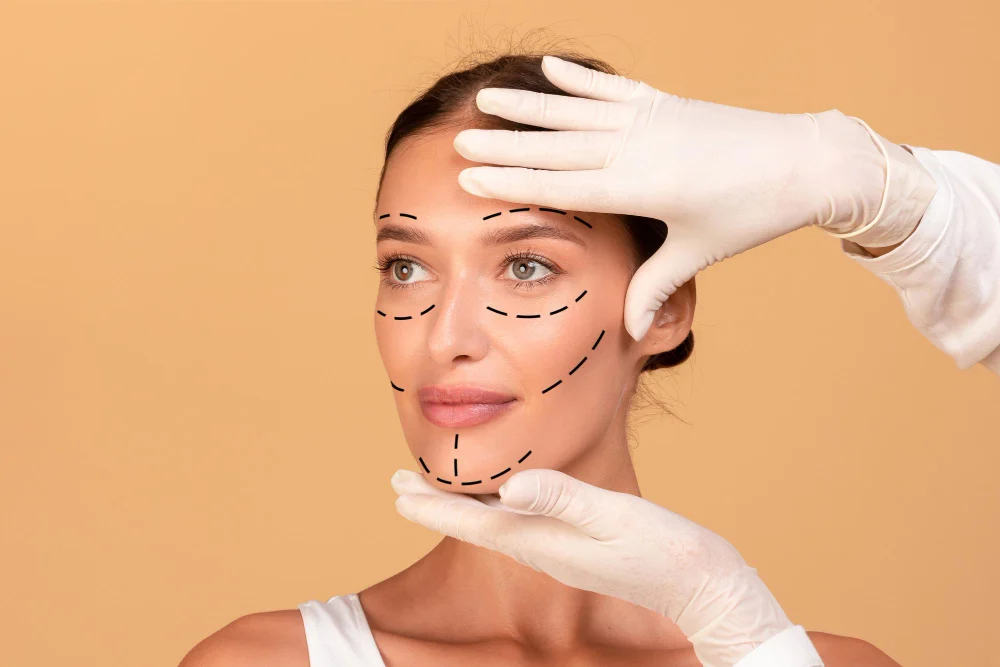
Summary:- Discover the six main types of facelift surgery and understand how each technique differs in approach, results, and longevity. This guide explains the evolution of facelift procedures and helps patients make informed decisions based on facial anatomy rather than marketing terms. Patients frequently search online for the different types of facelift surgery, hoping to …

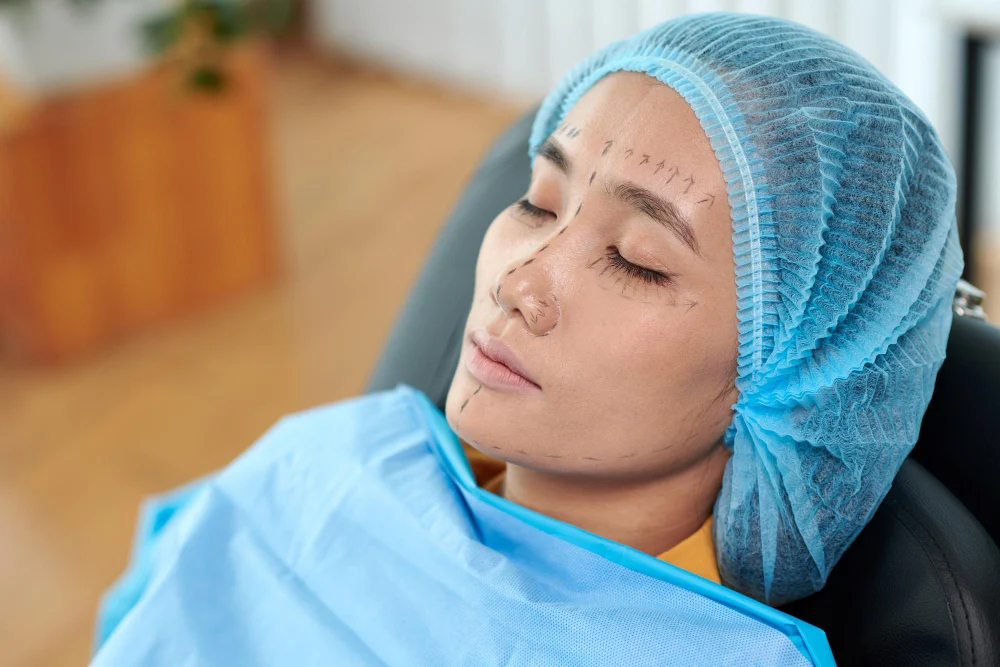
Summary:– Discover the six main types of facelift surgery and understand how each technique differs in approach, results, and longevity. This guide explains the evolution of facelift procedures and helps patients make informed decisions based on facial anatomy rather than marketing terms.
Patients frequently search online for the different types of facelift surgery, hoping to discover which facelift is “the best.”
Unfortunately, much of the information available online is confusing because different websites classify facelift procedures in completely different ways.
Some articles classify facelifts according to the surgical technique (for example, a deep plane facelift, SMAS facelift or SMAS plication facelift).
Others classify them according to the area of the face being treated (for example, a mid facelift, lower facelift or brow lift).
Others describe how extensive the surgery is (for example, a mini facelift or a full facelift).
These are three completely different classification systems.
Comparing them is rather like comparing apples and oranges.
For example, a deep plane facelift describes how the operation is performed, whereas a mid facelift describes which part of the face is being treated, and a mini facelift simply refers to how extensive the operation is. These terms are not interchangeable, which is why so many patients become confused when researching facelift surgery online.
In this article, I will classify the different types of facelift surgery according to the surgical technique, as I believe this is the clearest and most meaningful way to understand the differences between modern facelift procedures and establish a realistic facelift surgery expectation.
Key Takeaways
- The internet often mixes different ways of classifying facelift procedures, which can confuse patients.
- Types of facelift surgery should ideally be classified according to the surgical technique rather than the area treated or the extent of surgery.
- Modern facelift surgery ranges from skin-only facelifts to advanced deep plane facelifts, each offering distinct benefits of facelift surgery.
- Each technique has its own advantages, limitations and appropriate patient selection.
- No single facelift technique is right for every surgeon or every patient.
- Later in this article, I explain why I have chosen to perform the deep plane facelift exclusively in my own practice.
Why Are There So Many Different Types of Facelift Surgery?
Facelift surgery has evolved enormously over the past fifty years.
As our understanding of facial anatomy has improved, surgeons have developed increasingly sophisticated techniques to achieve more natural and longer-lasting results.
Each new generation of facelift surgery attempted to improve on the previous one.
Some techniques focused primarily on tightening the skin.
Others recognised that lifting the deeper facial tissues produced a more natural result.
More recently, surgeons have developed procedures that release the retaining ligaments of the face and reposition the descended facial fat back towards its youthful position.
As a result, there are now several recognised surgical techniques, each representing a different philosophy of facial rejuvenation. Understanding these options is vital before your initial deep plane facelift consultation, helping patients appreciate why not all facelifts are the same.
The 6 Main Types of Facelift Surgery
1. Skin-Only Facelift
The skin-only facelift is the oldest facelift technique and was widely performed many decades ago.
As its name suggests, only the skin is lifted and tightened, while the deeper supporting tissues remain largely untouched.
At first glance, this may seem logical. After all, ageing appears to cause loose skin.
However, this is only part of the story.
Facial ageing is not caused by skin laxity alone. One of the most important changes is that the deeper facial fat gradually descends into the lower face. As this happens, the cheeks lose their youthful fullness, while the lower face becomes heavier, contributing to jowls and a less defined jawline.
A skin-only facelift cannot correct these deeper anatomical changes because it does not reposition the descended facial fat. Instead, the skin is simply pulled over tissues that remain in an aged position.
This is one of the reasons why skin-only facelifts can sometimes produce an overly tight or “pulled” appearance, while failing to restore the natural contours of a youthful face.
For this reason, modern facelift techniques increasingly focus on repositioning the deeper facial tissues rather than relying on skin tightening alone.
2. SMAS Plication Facelift
The introduction of the SMAS (Superficial Musculoaponeurotic System) represented a major breakthrough in facelift surgery.
Rather than relying solely on skin tightening, surgeons recognised that the SMAS could also be lifted.
In a SMAS plication facelift, the SMAS is folded and tightened using sutures without extensively separating it from the underlying tissues.
By tightening this deeper layer, less tension is placed on the skin closure, often producing a more natural result than a skin-only facelift.
SMAS plication remains a popular technique and can be very effective in carefully selected patients.
3. SMASectomy Facelift
A SMASectomy facelift takes a different approach.
Instead of folding the SMAS, a small strip of SMAS tissue is removed before the remaining edges are sutured together.
This shortens and tightens the SMAS layer, providing facial support while reducing tension on the skin.
Some surgeons favour this technique because it can produce reliable and predictable lifting of the lower face.
However, it does not involve extensive mobilisation of the deeper facial tissues.
4. SMAS Flap Facelift
The SMAS flap facelift represented another important evolution in facelift surgery.
Instead of simply tightening or excising the SMAS, the surgeon carefully elevates the SMAS as a separate flap before repositioning it.
This allows greater mobilisation of the deeper facial tissues and often produces a more natural and durable result than SMAS plication or SMASectomy techniques.
Many surgeons consider the SMAS flap facelift an important bridge between traditional SMAS surgery and the modern deep plane facelift.
5. Composite Facelift
The composite facelift is an advanced variation of the deep plane concept.
In addition to elevating the SMAS and descended facial fat, the orbicularis oculi muscle surrounding the lower eyelid is lifted as part of the same composite tissue flap.
The aim is to achieve more extensive rejuvenation of the midface and the transition between the lower eyelid and the cheek.
The composite facelift is technically demanding and performed by relatively few surgeons, but in selected patients it can produce excellent rejuvenation of the central face.
6. Deep Plane Facelift
The deep plane facelift is widely regarded as one of the most advanced techniques in modern facial rejuvenation surgery.
Unlike procedures that primarily tighten the skin or simply tighten the SMAS, the deep plane facelift releases the retaining ligaments of the face and repositions the deeper facial tissues as a single anatomical unit.
One of the greatest misconceptions about facelift surgery is that it simply tightens loose skin. In reality, a proper deep plane facelift expectation should center on how it restores the patient’s own facial anatomy. As we age, the facial fat pads gradually descend from the cheeks into the lower face, contributing to jowls, deeper nasolabial folds and loss of jawline definition.
The deep plane facelift restores these descended tissues towards their original youthful position.
This often recreates natural cheek fullness without adding any new volume.
Rather than stretching the skin tighter, the procedure restores the underlying facial architecture responsible for youthful facial contours.
Understanding the Evolution of Facelift Surgery
Looking at these techniques together reveals an interesting pattern.
Each successive generation of facelift surgery has attempted to address the limitations of the previous one.
The progression has been from tightening the skin, to lifting the SMAS, and finally to repositioning the deeper facial anatomy responsible for facial ageing.
This evolution reflects our growing understanding that youthful facial appearance depends far more on restoring anatomy than simply removing excess skin.
For this reason, modern facelift surgery is no longer simply about making the face tighter.
It is about restoring the natural relationships between the skin, fat, muscles and supporting structures that have gradually changed over time.
What Is the Best Facelift? Dr Kremer’s Professional Ranking
One of the questions I am asked most frequently during consultations is:
“What is the best facelift?”
The honest answer is that there is no single facelift procedure that is perfect for every patient. The most appropriate operation always depends on your facial anatomy, the degree of ageing, your skin quality and your individual goals. Factors like the best age to get a facelift depend heavily on these variables rather than a number on a calendar.
However, patients are often interested in my professional opinion. The following ranking reflects my personal assessment after more than 30 years in plastic surgery and many years specialising in delivering the best facelift surgery London & UK has to offer. It is based on surgical anatomy, natural-looking results, longevity and the ability of each technique to restore youthful facial anatomy.
Dr Kremer’s Professional Ranking of the Best Facelifts
| Rank | Best Facelift Technique | My Rating | Why |
| 🥇 1 | Deep Plane Facelift | ⭐⭐⭐⭐⭐ | Restores youthful facial anatomy by releasing retaining ligaments and repositioning the descended facial tissues, producing the most natural and long-lasting results. |
| 🥈 2 | SMAS Flap Facelift | ⭐⭐⭐⭐☆ | Excellent mobilisation of the SMAS with natural, durable results. An important evolution towards modern facelift surgery. |
| 🥉 3 | Composite Facelift | ⭐⭐⭐⭐☆ | An advanced extension of the deep plane concept that also rejuvenates the lower eyelid and midface, although it is technically more demanding and not required for most patients. |
| 4 | SMAS Plication Facelift | ⭐⭐⭐☆☆ | Tightens the SMAS effectively but provides less mobilisation of the deeper facial tissues than newer facelift techniques. |
| 5 | SMASectomy Facelift | ⭐⭐☆☆☆ | A reliable procedure in experienced hands, although it provides less comprehensive rejuvenation than techniques that reposition the facial tissues more extensively. |
| 6 | Skin-Only Facelift | ⭐☆☆☆☆ | Tightens loose skin but does not restore the deeper anatomical changes responsible for facial ageing. |
The following sections explain why I have ranked each facelift technique in this order.
1. Deep Plane Facelift ⭐⭐⭐⭐⭐
For me, the deep plane facelift represents the gold standard in modern facial rejuvenation surgery.
Rather than simply tightening the skin or tightening the SMAS, the procedure restores the deeper facial anatomy.
By releasing the facial retaining ligaments and repositioning the descended facial tissues as one anatomical unit, the deep plane facelift addresses one of the fundamental causes of facial ageing rather than simply treating its visible consequences.
One of the greatest advantages of this technique is that it restores the patient’s own facial fat to its youthful position.
As a result, many patients regain natural cheek fullness without adding any additional volume.
Because the lift occurs within the deeper supporting tissues, there is very little tension placed on the skin itself. This allows the face to look refreshed rather than tightened. For these reasons, I have chosen to perform expert deep plane facelift surgery in London exclusively in my own practice.
2. SMAS Flap Facelift ⭐⭐⭐⭐☆
The SMAS flap facelift represents one of the most important milestones in the evolution of facelift surgery.
Instead of simply folding or tightening the SMAS, the surgeon carefully elevates it as a separate flap before repositioning it.
This allows greater mobilisation of the facial tissues and generally produces more natural and longer-lasting results than earlier SMAS techniques.
Although I believe the deep plane facelift goes one step further by releasing the retaining ligaments and restoring the facial anatomy more completely, the SMAS flap facelift remains an outstanding procedure in experienced hands.
3. Composite Facelift ⭐⭐⭐⭐☆
The composite facelift is an advanced extension of the deep plane concept.
In addition to elevating the SMAS and descended facial fat, it also lifts the orbicularis oculi muscle beneath the lower eyelid as part of one continuous tissue flap.
Its principal advantage is enhanced rejuvenation of the lower eyelid-cheek junction and central midface.
The procedure is technically demanding and performed by relatively few surgeons.
Although I have enormous respect for the anatomical principles behind the composite facelift, I believe the deep plane facelift achieves equally elegant and predictable rejuvenation for the majority of patients without the additional surgical complexity.
4. SMAS Plication Facelift ⭐⭐⭐☆☆
The SMAS plication facelift represented an important advance over skin-only facelift surgery.
By folding and tightening the SMAS with carefully placed sutures, it provides improved support for the facial tissues while reducing tension on the skin.
It remains an effective operation in carefully selected patients.
However, because the SMAS is tightened rather than fully mobilised, the amount of tissue repositioning is more limited than with a SMAS flap or deep plane facelift.
5. SMASectomy Facelift ⭐⭐☆☆☆
The SMASectomy facelift shortens and tightens the SMAS by removing a strip of tissue before repairing the remaining edges.
Many surgeons have achieved reliable and reproducible results using this technique.
Key to your satisfaction is understanding the long-term skincare routine and lifestyle things you can do to maintain a facelift after this type of intervention. Nevertheless, because the deeper facial anatomy is not extensively mobilised, I believe more modern facelift techniques provide a more comprehensive correction of facial ageing.
6. Skin-Only Facelift ⭐☆☆☆☆
Although the skin-only facelift occupies an important place in the history of facial rejuvenation surgery, it has largely been superseded by more advanced techniques.
We now understand that facial ageing is caused by much more than loose skin.
The deeper facial fat gradually descends into the lower face, flattening the cheeks, creating jowls and altering the youthful proportions of the face.
A skin-only facelift cannot restore these deeper anatomical changes because it simply tightens the skin over tissues that remain in an aged position.
For this reason, skin-only facelifts are far less capable of recreating natural facial anatomy than modern deep tissue techniques.
Which Type of Facelift Is Right for You?
The best facelift is not necessarily the newest operation.
Nor is it simply the highest-ranked procedure on a comparison table.
The most appropriate facelift depends on several important factors, including:
- Your facial anatomy
- The degree of skin laxity
- The position of your facial fat compartments
- Neck ageing
- Previous facelift surgery
- Your personal goals and expectations
Every face ages differently.
Some patients mainly experience tissue descent.
Others lose facial volume.
Most develop a combination of both.
For this reason, choosing the right facelift begins with understanding why your face has aged, rather than simply choosing the latest surgical technique.
At a Glance
- There are several recognised types of facelift surgery, but many websites confuse surgical techniques with procedures that simply describe the area of the face being treated or the extent of surgery.
- The deep plane facelift is my highest-ranked facelift technique because it restores youthful facial anatomy rather than simply tightening the skin.
- Modern facelift surgery has evolved from skin tightening to repositioning the deeper facial tissues responsible for facial ageing.
- Every facelift technique has advantages and limitations.
- The best facelift is ultimately the one that best addresses your own facial anatomy and pattern of ageing.
Final Thoughts
Searching online for the best facelift or the different types of facelift surgery can quickly become confusing.
Many websites combine surgical techniques, anatomical regions and marketing terms as though they describe the same thing.
They do not.
Before choosing a facelift, ask one simple question:
What anatomical problem is this operation actually correcting?
Once you understand that facial ageing involves much more than loose skin, the differences between modern facelift techniques become much clearer.
Ultimately, the best facelift is not simply the procedure with the most impressive name.
It is the operation that restores your facial anatomy in the most natural, elegant and long-lasting way.
Frequently Asked Questions
Which facelift lasts the longest?
Generally speaking, facelift techniques that reposition the deeper facial tissues, particularly the deep plane facelift, provide the longest-lasting results because they address the underlying anatomical causes of facial ageing rather than simply tightening the skin.
Which facelift looks the most natural?
Natural-looking results depend on both the surgical technique and the surgeon’s experience.
In my opinion, procedures that restore normal facial anatomy rather than relying on skin tension consistently produce the most elegant and believable outcomes.
Is the deep plane facelift suitable for everyone?
Although the deep plane facelift is my preferred technique, every patient requires an individual assessment to determine the most appropriate treatment plan.
Why do surgeons recommend different facelift techniques?
Every plastic surgeon develops their own preferences based on training, experience and understanding of facial anatomy.
Different techniques can all achieve excellent results when performed appropriately and for the right patient.
Which facelift do you perform?
I perform the deep plane facelift because I believe it offers the most anatomical, natural and durable correction of facial ageing.
Book a Consultation
It’s easy and free!